
Our Approach
Visible preparedness starts with the right question.
What needs to be visible, to whom, and where? Answer that first. Equipment follows.
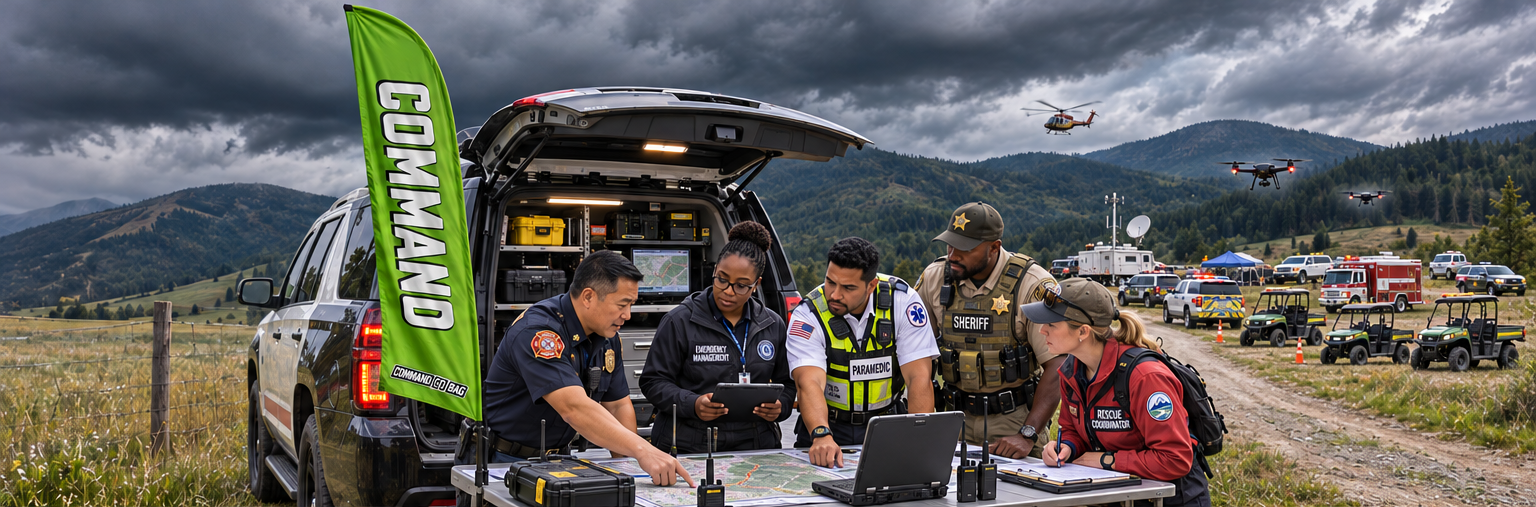
The plan is only as good as its execution
A location in a plan is not a location in the field. Visible identification makes command, staging and reunification recognizable to every arriving person.
Command GoBag equipment is portable and carried by the people who deploy it.
Five Steps to Visible Preparedness
A practical sequence for any operation
Plan across agencies and jurisdictions
Identify what must be visible, who needs to find it, and where equipment will deploy. Include mutual-aid partners and dispatch.
Choose the equipment
Match configuration and portability to your operation — patrol vehicle carry is different from a school storage room.
Make locations recognizable
Deploy according to your incident plan and the decisions of responsible authorities.
Add digital anchors where useful
Where it adds value — especially in rural areas — use the optional MyFlare Alert integration, live for configured, participating teams, to associate designated locations with digital anchors for participating dispatchers and responders.
Exercise together and maintain
Test the full workflow with the actual agencies and dispatch partners who will respond. GoBag systems work independently of any digital integration.

Responder support
Keep responders visible and supported
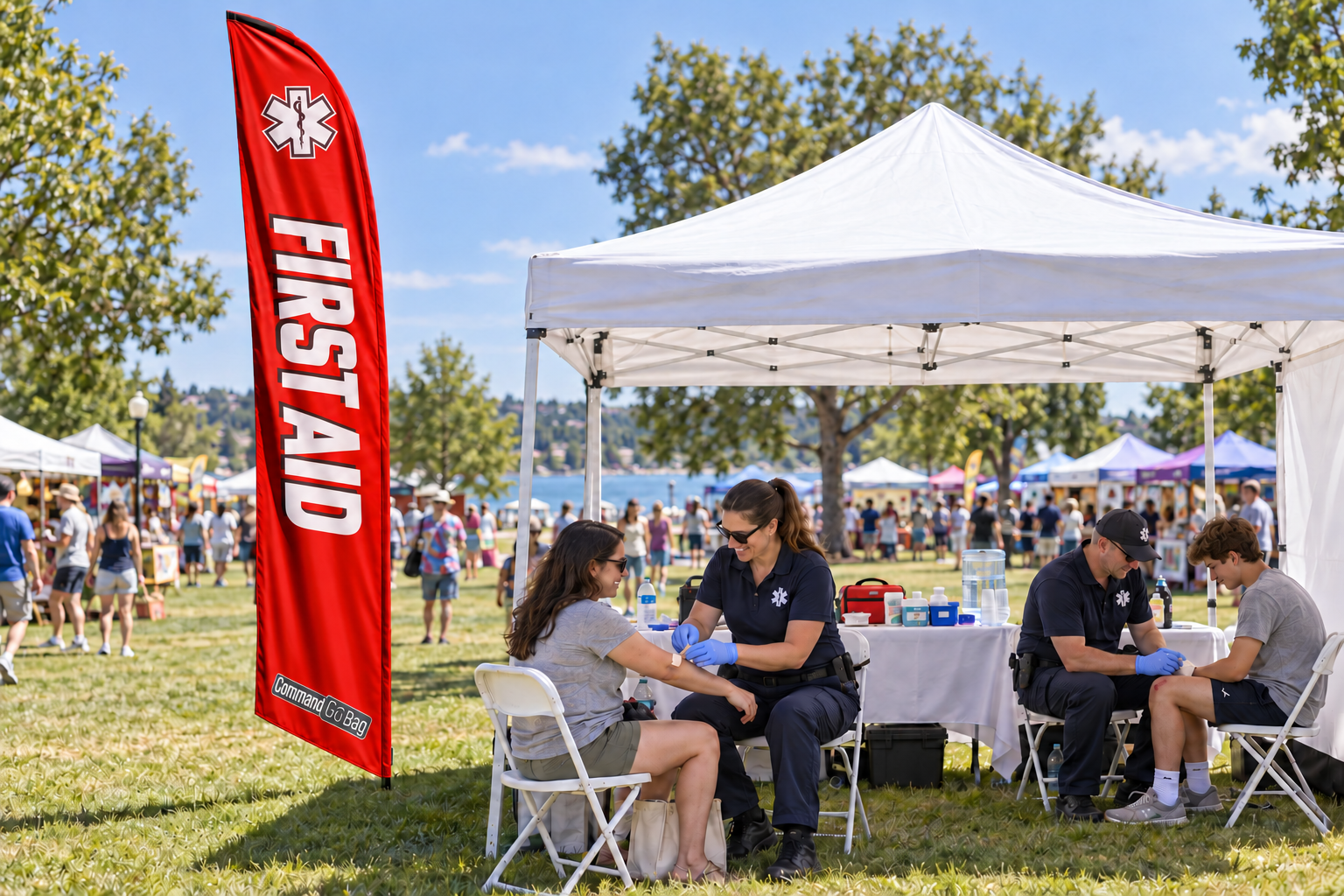
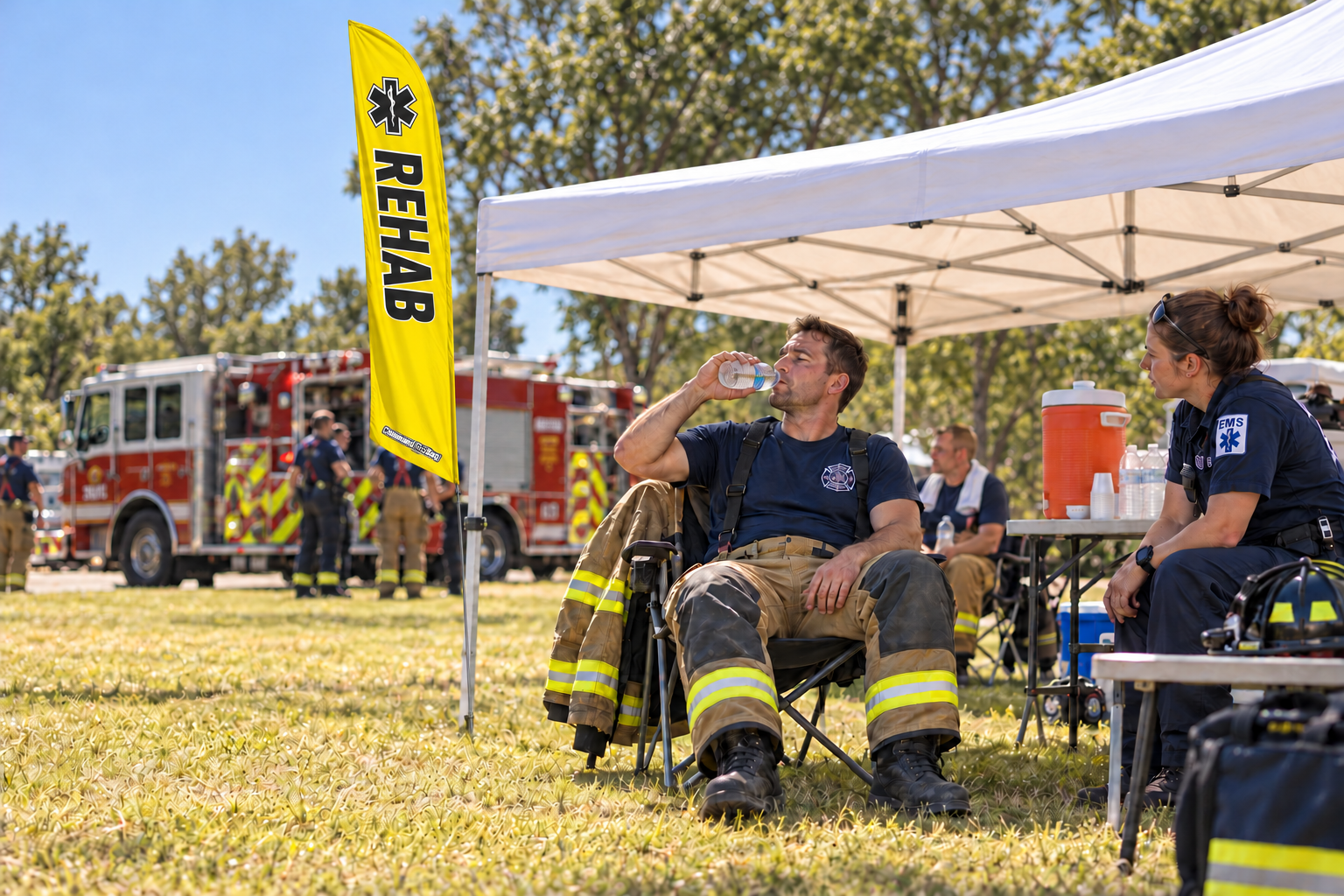
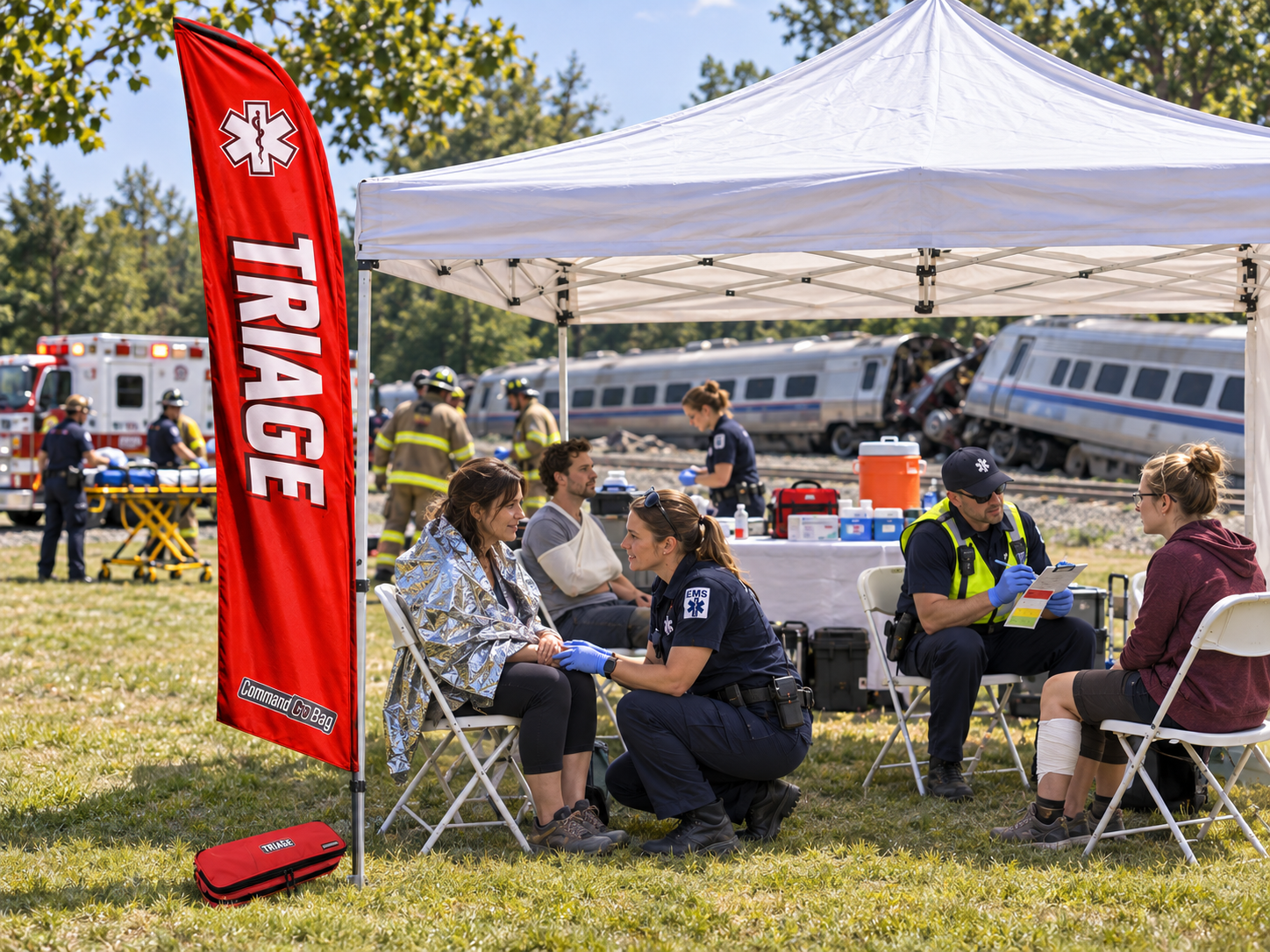
First Aid, REHAB and TRIAGE flags mark treatment, rest and triage areas so personnel can find support without radio traffic.
Optional Integration — Live
Connect field locations with MyFlare Alert
The optional MyFlare Alert integration is live for configured, participating teams. Where it adds value — particularly in rural operations — participating dispatchers and responders can view designated locations established by incident command. Command GoBag flags work independently.
Particularly useful in rural areas where mutual-aid units may be unfamiliar with local roads.
Ready to apply this to your operation?
Tell us about your operational need and we will help you identify the right configuration.